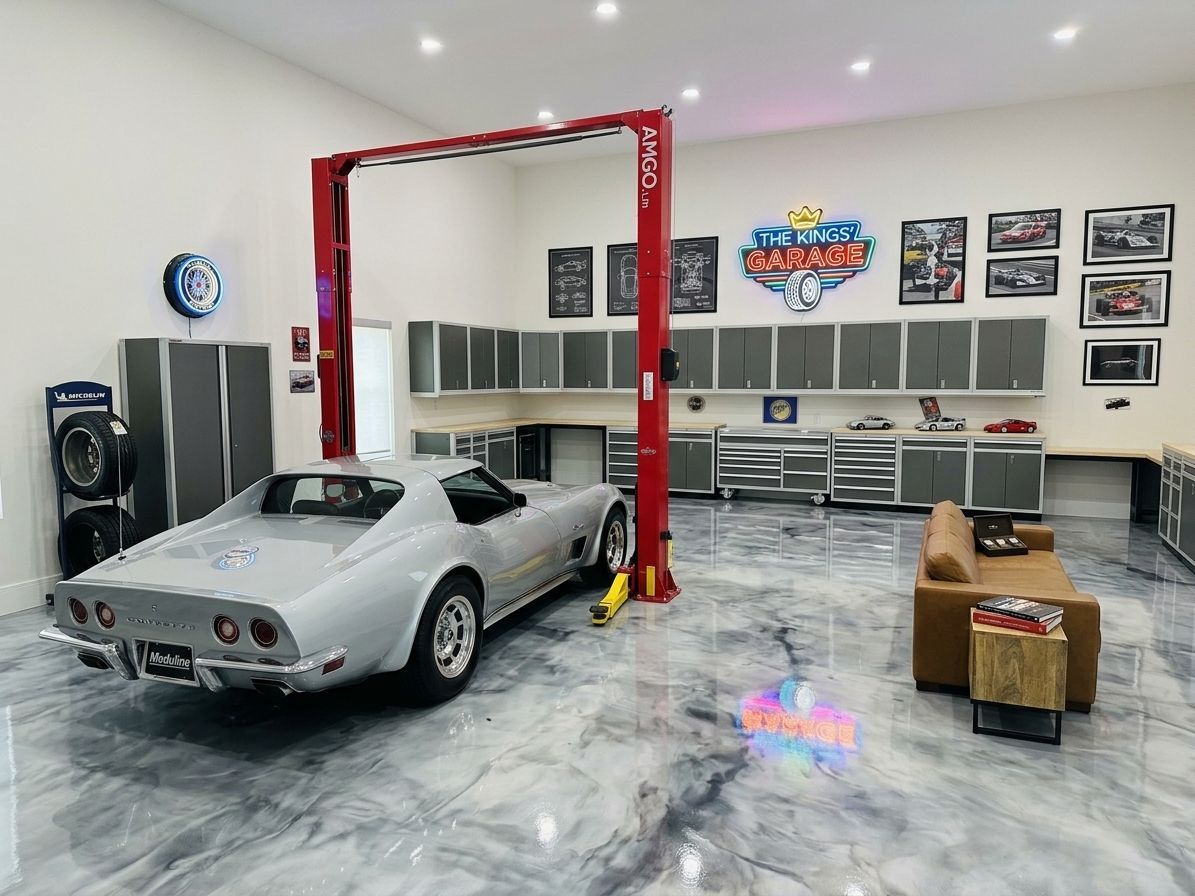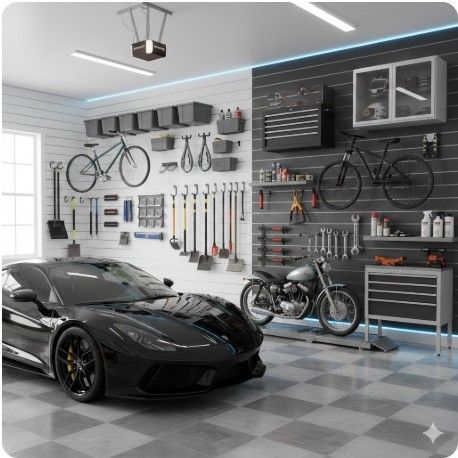
Why Houston’s Heat and Humidity Destroy Cheap Garage Floors

And What to Use Instead
Walk out to your garage right now and take a close look at the concrete beneath your feet. Is the coating peeling away in thin, flaky sheets right where your vehicle's hot tires rest? Has the once-clean, crisp gray or white finish shifted into a muddy, unappealing amber or yellow tone (like in the photo above)? Do you notice random bubbles, blisters, or fine hairline cracks spiderwebbing across the surface?
If you live in the Greater Houston area—whether in Katy, The Woodlands, Sugar Land, or right in the heart of the city—you are absolutely not alone. Every single year, thousands of local homeowners attempt to save a few dollars by purchasing off-the-shelf DIY garage floor epoxy kits or hiring low-bid contractors who use cheap, unengineered standard epoxies. And every single year, Houston’s notorious, unrelenting climate systematically destroys those choices.
Our local weather isn’t just uncomfortable and oppressive for humans during the long summer months; it is a literal death sentence for low-grade concrete coatings. In this comprehensive breakdown, we will look at the exact science of how Southeast Texas weather ruins standard garage floor epoxy paints, why cheap epoxy is fundamentally unsuited for our environment, and how advanced polyaspartic floor coatings provide the ultimate climate-smart engineered solution.
The Three Climate Killers Threatening Your Garage Floor
To understand why a cheap floor coating fails so rapidly in Houston, you have to look at the severe environmental forces that batter our homes. Concrete might look solid, smooth, and completely impenetrable to the naked eye, but it is actually a highly porous, rigid sponge. It breathes, absorbs moisture, expands, and contracts. When you place a low-end coating on top of a volatile foundation, a massive material conflict occurs.
1. High Relative Humidity & Hydrostatic Pressure
Houston's geographic location near the Gulf Coast creates a humid environment with oppressive summer dew points. On any given summer morning, relative humidity levels across the region routinely climb past 85%. Because our regional water table is incredibly high, the soil directly beneath your garage's concrete foundation remains constantly saturated with damp coastal moisture.
Because concrete is highly porous, it continuously pulls water up from the damp soil beneath your home through a process called capillary action. When our intense Texas sun beats down on your garage, the slab heats up, and that trapped moisture attempts to evaporate upward into the air.
If your garage floor is coated with a standard, non-breathable DIY epoxy kit, it creates a rigid plastic wall directly over those pores. The rising water vapor has nowhere to go. It pools beneath the epoxy shell, building immense upward force known as hydrostatic pressure. Eventually, this pressure overpowers the weak physical bond of the cheap paint, creating bubbles and blisters that inevitably pop, leaving behind ugly, exposed patches of bare concrete.
2. Radical Temperature Swings & Thermal Shock
A typical summer afternoon in Houston regularly brings ambient outdoor temperatures fluctuating between 95°F and 105°F. Inside an enclosed, uninsulated garage, stagnant air traps heat, causing the surface temperature of your concrete floor slab to easily rocket past 120°F.
Now, imagine a common local scenario: your garage floor is baking at 120°F when a sudden, violent afternoon thunderstorm rolls off the Gulf and drops torrential rain on your neighborhood. The outdoor temperature plummets by twenty degrees in minutes. You pull your wet, rain-chilled vehicle across the driveway and park it straight onto the blistering hot garage slab.
This creates an immediate event known as thermal shock. The sudden, drastic temperature drop causes the concrete slab to contract rapidly. Cheap, brittle epoxy coatings lack structural elasticity. Because the rigid epoxy cannot stretch or contract at the exact same rate as the moving concrete beneath it, the internal bond snaps completely. This material failure causes the floor coating to crack, lift, and delaminate away from the slab.
3. Extreme UV Index & Chemical "Chalking"
The ultra-violet (UV) radiation in Southeast Texas is exceptionally harsh. During peak summer months, Houston frequently sustains a UV Index of 10 or higher—a level designated as "Extremely High."
Standard epoxy resins possess incredibly poor UV stability. The moment sunlight hits your garage floor—whether through windows, side entry doors, or simply while your main overhead garage door is open—the intense UV rays begin breaking down the polymer bonds within the epoxy layer. This chemical degradation triggers two severe, irreversible aesthetic and structural issues:
- Severe Yellowing: The beautiful, clean gray, tan, or white base color you originally applied reacts chemically to the light, turning an uneven, weathered amber or dirty yellow hue.
- Chalking: As the chemical structure degrades, the top layer of the resin disintegrates into a powdery white residue. This completely destroys the floor’s protective gloss, making it highly susceptible to stains and structural wear.
Hot Tire Pick-Up: The Final Blow to Cheap Coatings
Combine Houston’s punishing natural climate with a mechanical phenomenon called Hot Tire Pick-Up, and a low-end garage floor coating stands absolutely zero chance of survival.
Think about what happens when you drive home from work or run errands on local asphalt and concrete. On a 100°F day, Houston blacktop can easily exceed 140°F. As you drive, your vehicle's heavy rubber tires absorb that heat, expanding slightly and softening under intense friction and thermal load.
The moment you pull into your garage and park, those hot, expanded tires begin to cool down. As the rubber cools, it naturally contracts and tightens. If your floor is covered in a cheap, heat-sensitive DIY epoxy or latex paint, the intense residual heat from the tires softens the floor coating beneath them. As the tire shrinks and cools, it creates a powerful mechanical vacuum, locking onto the softened floor finish.
The next morning, when you back out of your driveway, the tire pulls upward with immense force. Because the cheap coating has softened and lost its structural integrity under the tire's heat, it is torn completely away from the concrete slab, leaving behind ugly, black, bare tire-shaped tracks that cannot be cleaned or repaired.
The Climate-Smart Engineered Solution: Polyaspartic Coatings
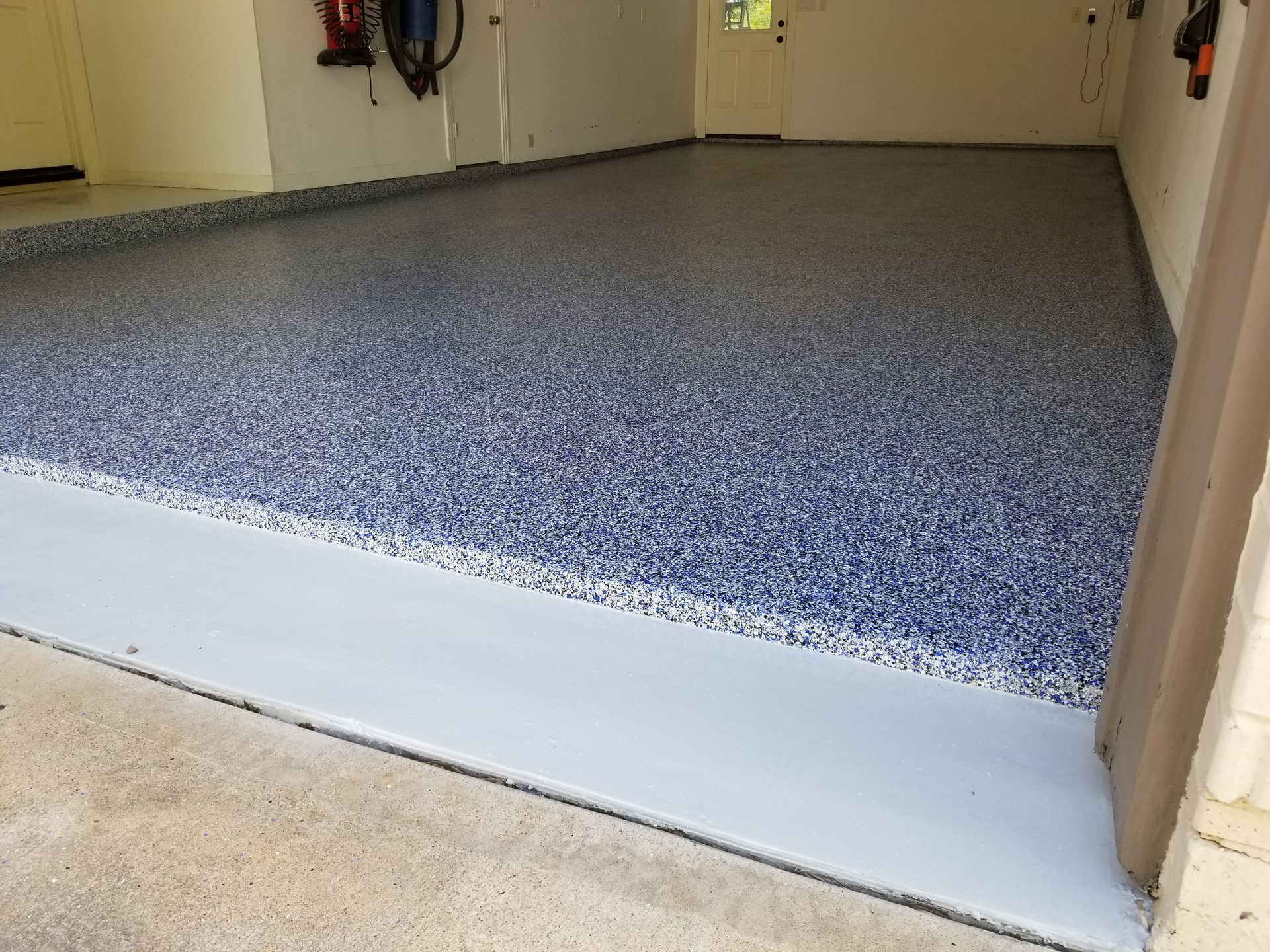
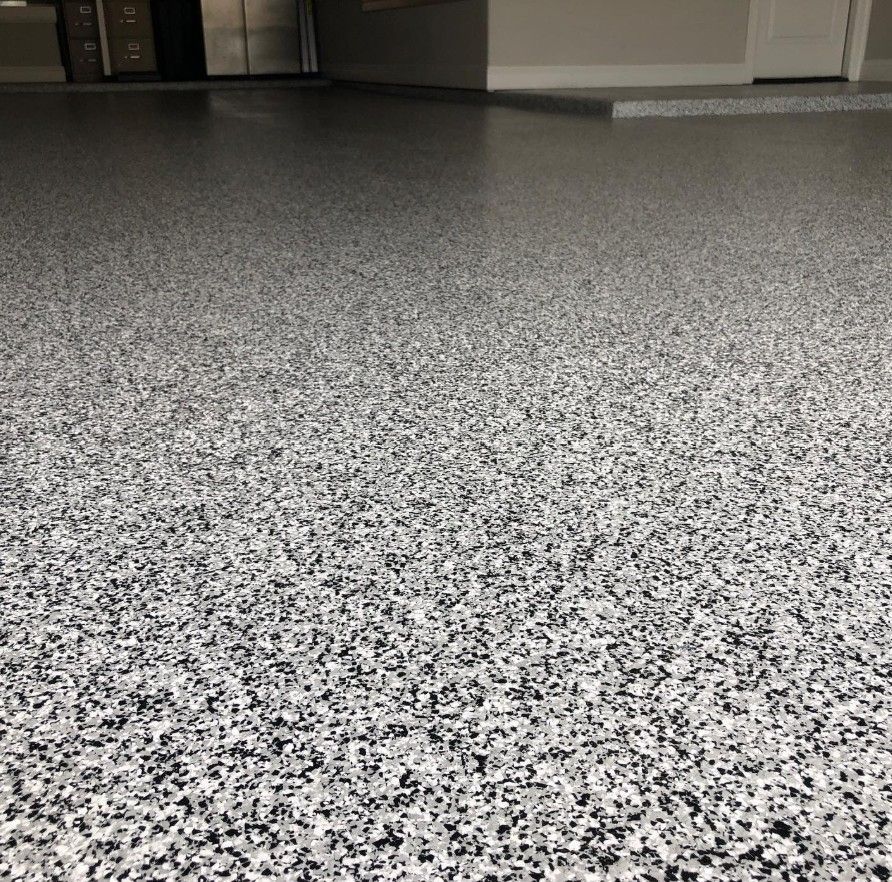
Fortunately, you do not have to settle for a cycling routine of applying, peeling, and re-applying cheap paints. The flooring industry developed an industrial-grade alternative specifically designed to withstand extreme thermal and chemical environments: Polyaspartic coatings.
Originally engineered to protect heavy structural steel bridge decks, offshore oil rigs, and high-traffic industrial facilities exposed to severe outdoor weather, polyaspartic chemistry is uniquely qualified to handle everything the Southeast Texas climate can dish out.
Polyaspartic vs. Standard Epoxy Coatings
| Performance Feature | Standard DIY / Low-Bid Epoxy | Industrial-Grade Polyaspartic |
|---|---|---|
| Material Flexibility | Brittle and rigid; cracks easily under localized stress or concrete movement. | Up to 10x more flexible; elongates and moves smoothly with the concrete slab. |
| UV Protection | Poor; breaks down, loses gloss, and turns an unappealing yellow or amber color. | 100% UV Stable; will never discolor or chalk, even under direct sunlight. |
| Installation and Cure Time | Slow; requires 3 to 7 full days of curing before you can safely park a vehicle. | Next-Day Drive-On;Fully cured and ready for vehicles in just 24 hours. |
| Adhesion Mechanism | Forms a topical, surface-level mechanical grip that is easily broken. | Penetrates deep into concrete pores to create a permanent molecular bond. |
| Thermal Resistance | Low; easily softens under hot tires, leading to chronic hot tire pick-up. | High; completely immune to hot tire pick-up and massive thermal shocks. |
The fundamental difference lies in how these two materials interact with your concrete floor. Standard epoxy simply sits on top of the concrete surface like a heavy, rigid plastic sticker. If moisture pushes up from below or a hot tire pulls from above, the topical bond fails.
Polyaspartic coatings utilize an advanced aliphatic polyurea chemical structure. When applied to a properly prepared surface, the liquid penetrates deep into the open pores of the concrete slab, curing within the microscopic channels of the stone itself. It does not just sit on top of your floor; it fuses with the concrete to become a permanent part of your home's foundation. It maintains excellent flexibility, meaning it can stretch and move through 100-degree temperature swings without ever snapping its bond or cracking.
Get It Done Right the First Time with Houston’s Authority on Polyaspartic Garage Floors
You don't have to waste your hard-earned money, valuable weekend hours, and physical energy wrestling with messy DIY retail kits that are virtually guaranteed to peel up in a matter of months. Trust the local professionals who understand the exact science of engineering a beautiful, high-performance floor for our unique coastal climate.
At Global Garage Flooring & Design of Houston, we don't just roll a layer of paint over your existing garage problems. Our highly trained team utilizes industrial-grade diamond grinders to thoroughly prep your concrete, removing the weak top layer of laitance, opening up the slab's internal pores, and completely repairing any existing cracks or deep moisture damage. We then apply a heavy-duty, multi-layer polyaspartic coating system embedded with decorative flakes that is built to effortlessly handle decades of brutal Houston summers.
Are you ready to stop looking at a stained, peeling, uninspired garage floor and transform your space into a pristine, showroom-quality environment? Explore our specialized local options and resources today:
- Learn the Details: Dive deep into the science, durability factors, and diverse color customization options of our premium Polyaspartic Flake Floors.
- See Our Work: Look through our extensive local Polyaspartic Floor Gallery to find inspiration and select the perfect aesthetic blend for your home's style.
- Real Results: Check out our collection of stunning Before and After Pictures to see the dramatic transformations we consistently deliver for our neighbors across Houston.
- Complete Your Total Space: A durable, climate-proof floor is only the foundation of a great garage. Visit our Main Website to discover our complete lineup of premium garage enhancement products. Beyond floors, we design and install heavy-duty custom garage cabinets and smart garage storage products tailored to help you maximize your space.
Stop fighting the brutal Texas weather with temporary fixes. Contact Global Garage Flooring & Design of Houston today to schedule your free, no-obligation professional estimate, and invest in a garage floor that is truly engineered to last.